Multicolored credit cards organized into triangular pattern representing personalized card issuance
#Payment Technology

Hyper-personalization 2.0: Evolution of personalization in payment card experiences

New Technology
7 Mins.

Emerging technologies such as AI and drop-on-demand printing are enabling the next wave of card personalization, making it faster, more affordable – and more meaningful to customers.

As consumer expectations shift and brands across all industries compete for the attention of customers, personalized experiences have emerged as a key trend.

Nowhere is this more apparent than in the saturated financial services market, where a burgeoning number of banks and fintechs compete for consumer engagement, and customer retention and loyalty rates are crucial measures of success. Attractive payment card programs are just one area where financial companies battle for acquiring or retaining customers, and hyper-personalization has become the norm in this competitive space. By tailoring unique card programs to target specific customer segments, and by offering hyper-personalized cards to attract individuals, banks and fintechs can ensure that they reach each customer on a personal level – reinforcing their connection and loyalty to the brand.

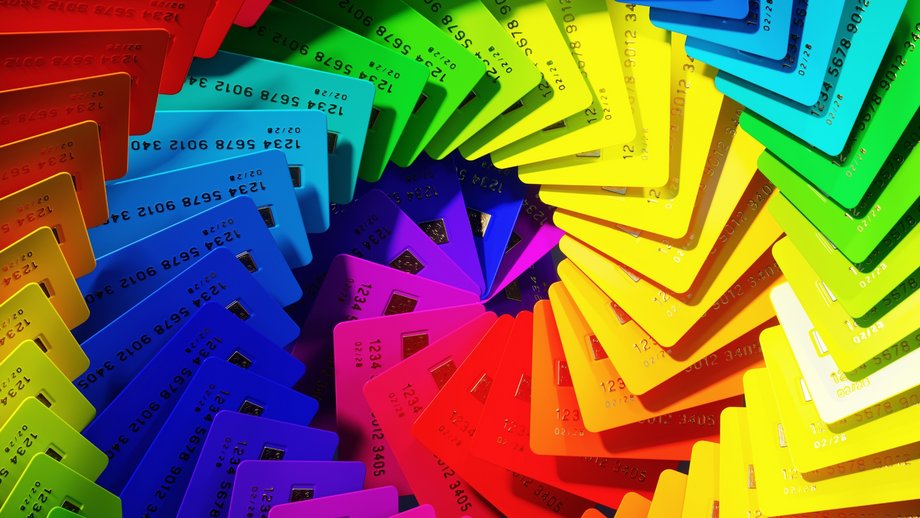
Numerous bright, colorful credit cards in rainbow colors arranged in a spiral pattern.

Hyper-personalization: A strategic differentiator

With the advance of technology – particularly the emergence of AI tools and drop-on-demand (DOD) printing – traditional personalization in card issuance is evolving even more into hyper-personalization and individualization. 

Today, banks and fintechs are moving beyond simply printing a customer’s name and number on a card. They’re now able to customize every element of the card design and even the entire issuance journey – from its material and texture to its color, imagery, and even scent – to create a truly unique and deeply personal product for each customer.

Imagine a bank customer – we’ll call her Jane – signs up for a new account and wants her payment card personalized. She wants her payment card to be made from an eco-friendly material, and to include a picture of her dog, whose name is Pepper, on it. Maybe in that moment she’s not able to find the right photo of Pepper. So, she decides to take another one and merges it with the help of AI into the right scenery, correcting spots of attention or turning it into a painted piece of art.

With its hyper-personalized approach to card design, and by using DOD printing technology, Jane’s bank can easily meet her request. The process of creating and customizing Jane’s payment card is very unique, quick, and straightforward, and she receives her new hyper-personalized card from the bank shortly after submitting her design. 

This hypothetical example reflects a growing trend across the payments sector. Hyper-personalization is a competitive imperative for banks and fintechs. When it comes to payment cards, hyper-personalization helps to deepen the emotional bonds between customers and their financial providers, increasing the likelihood of remaining loyal to the brand.

Hyper-personalization and individuality is something that brings you closer to the customer and makes a more intense customer relationship.

Sascha Behlendorf
Director Value Creation, G+D

Why hyper-personalization matters

There is a strong business case for hyper-personalization in financial services. Research shows that customers typically spend more, use more services, and remain loyal to their bank or fintech for longer once they’ve developed a closer emotional affinity to the brand. In 2023, a report from The Financial Brand found that financial institutions implementing advanced personalization strategies reported a 15%–20% increase in revenue and a 10%–30% reduction in customer acquisition costs.1 In this context, hyper-personalization becomes a key competitive differentiator. 

Moving beyond generic experiences can help brands create a sense of ownership and individuality that resonates with customers on a more personal level. Fintech leaders such as Revolut or Monzo have embraced this, using personalized card experiences to strengthen ties with their users and position themselves as customer-centric innovators. 

Trade Republic is another standout example. When the fintech launched its Mirror Card, it quickly became a viral success. The card appealed to customers not just for its functionality and benefits, but also for its striking design and bold approach. In short, when used correctly, hyper-personalization doesn’t just enhance the payment card itself – it can elevate the issuer’s brand identity.

The evolution of card personalization

Personalization in payment cards has come a long way from simply embossing a customer’s name and account number. Today, card personalization has become experiential, with banks and fintechs now using the issuance journey and its physical payment cards made from an array of materials – including wood, metal, and eco-friendly plastics – as tools for fine-tuning their brand messaging.

Tactile finishes, textured surfaces, and striking visual designs have long been used to produce pre-printed, large-batch cards for personalization. But today, additional methods can be used to print mini-series of payment cards more efficiently and on demand. With G+D’s Print-on-Demand service, issuers can enjoy great agility in managing their card portfolio without missing powerful design features such as metallic, mirror, pearlescent, or tactile effects. Issuers can offer unexpected yet highly memorable, unique experiences for customers – for example, with individual AI-generated artworks. These represent stand-out brand tokens that are top-of-wallet for card holders.

These possibilities are creating a shift in how payment cards are perceived by the customer. Personalized cards have moved beyond simple payment tools to become lifestyle statements – symbolizing the values and status of users.

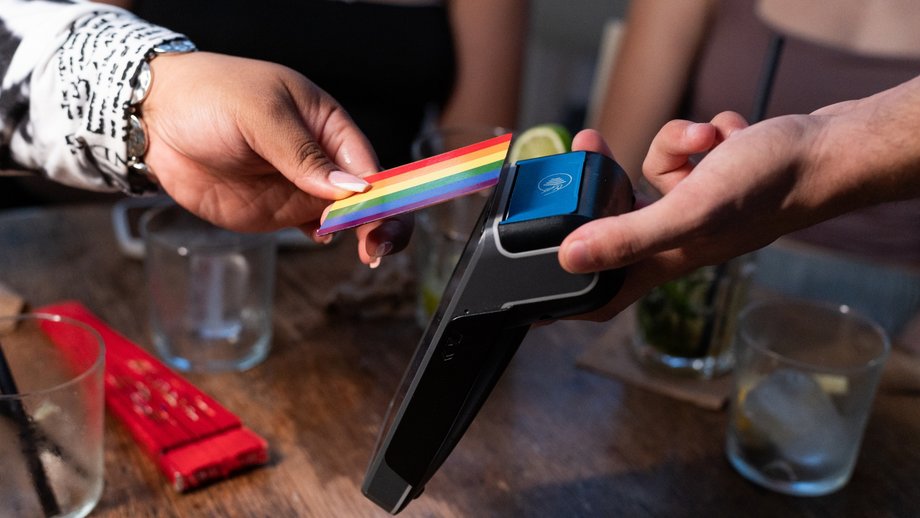
A woman makes a contactless payment with her colorful credit card at a card terminal.

AI takes center stage

At the forefront of the hyper-personalization revolution in payment cards is G+D’s Convego® Card Designer, an AI-powered tool that transforms how consumers engage with their cards. This innovative platform moves beyond just basic card design options, such as uploading a photo. It allows users to generate completely original artwork for their cards simply by entering a text prompt – whether it’s “a city skyline at sunset” or even “a fluffy unicorn in space” – and then using AI to verify the design internally with an AI-powered screening functionality that gives the issuer the security to issue a card that meets their visual standards.

By tapping into generative AI, the Convego® Card Designer democratizes design and hands creativity back to the user, making it possible for anyone to co-create a card that feels uniquely theirs. Card design is therefore no longer about selecting from a limited image gallery or color palette – it’s about turning your imagination into a real-world product you use every day.

The rise of on-demand printing

Traditionally, issuing payment cards involved two separate steps: mass-producing the card body with the generic artwork for the entire card program, and then personalizing them with the individual card holder data, as well as visually with names and numbers. Today, DOD printing is bringing up a new way of producing personalized cards, combining card production with personalization in one process, and offering a new card production method to sit alongside traditional mass production.  

By leveraging industrial inkjet technology, DOD printing enables each card to be printed and customized on the spot, making the whole process, including personalization, much faster for card issuers.

DOD printing solutions put payment card hyper-personalization at the fingertips of card issuers and their customers, allowing them to bring unique experiences and bespoke cards to their customers like never before.

Key takeaways

  1. Hyper-personalization is now a strategic necessity —not a luxury. 
    Hyper-personalized payment cards help banks and fintechs deepen emotional connections, drive customer loyalty, and stand out from competitors.
  2. New technologies are unlocking creative personalization at scale.
    Tools such as G+D’s Convego® Card Designer and drop-on-demand printing are making personalization faster, more affordable, and more meaningful for customers.
  3. Customer data is the key to hyper-personalization.
    Card issuers need rich and secure customer data to deliver hyper-personalized products that really resonate. G+D helps issuers handle and protect customer data correctly, engendering trust and data security.
  1. Digital Banking Transformation Trends for 2023, The Financial Brand, 2022

Published: 23/09/2025

Share this article

Subscribe to our newsletter

Don’t miss out on the latest articles in G+D SPOTLIGHT: by subscribing to our newsletter, you’ll be kept up to date on latest trends, ideas, and technical innovations – straight to your inbox every month.

Please supply your details: